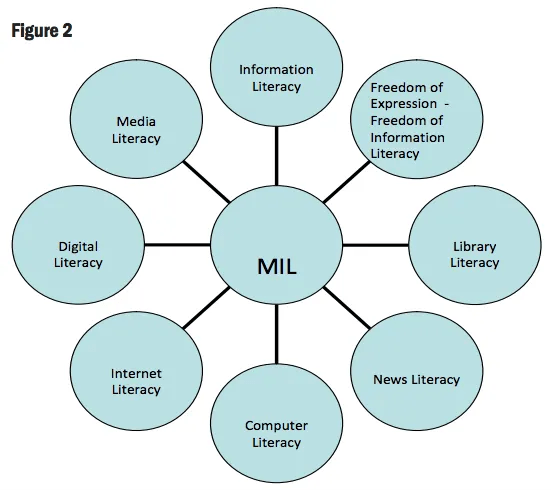
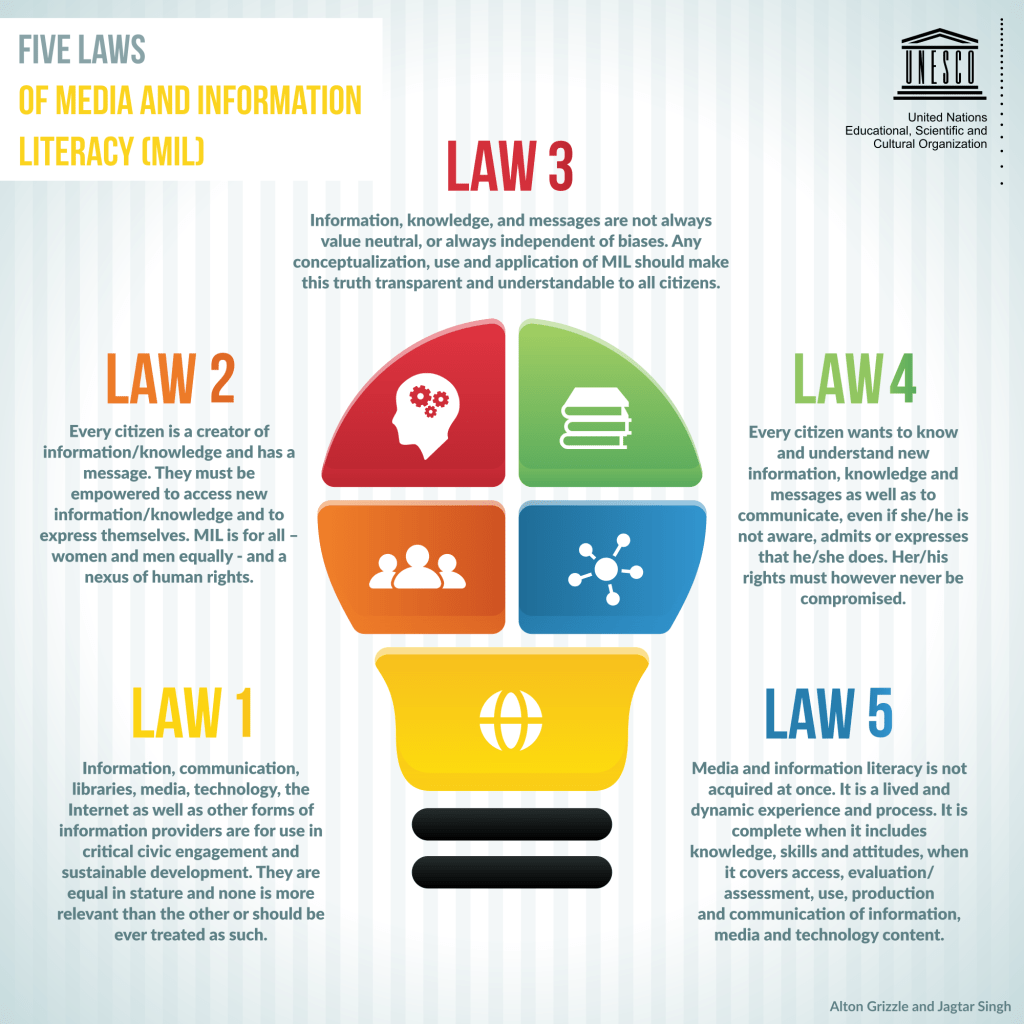
In fact, information is available through a large range of media and there are many challenges and decisions that are faced by consumers of information today. In this context educators have an important role in the development of students’ information literacy skills to enable all students to become independent, lifelong learners. Educators need to incorporate learning activities, assignments and assessments which require learners to articulate information needs; to find information and resources in digital environments; to organise, process, analyse and interpret information; and to compare and critically evaluate the credibility and reliability of information and its sources.
This weeks tasks are:
- Explore the resources (articles , videos, websites)
- Search and share 1 digital resource for IL or ML development: put the link and a brief summary on the Forum.
here is my resource for Media Information literacy:
http://unesco.mil-for-teachers.unaoc.org/modules/
It is a course for teachers and includes 12 modules with the following topics. Each Module is divided into different units.
Module 1: Citizenship, Freedom of expression and information, Access fo information, democratic discourse and life-long learning.
Module 2: Understanding the News, Media, and Information Ethics
Module 3: Representation in Media and Information
Module 4: Languages in Media and Information
Module 5: Advertising
Module 6: New and Traditional Media
Module 7: Internet Opportunities and Challenges ….
The second task for this week is:
- Read in particular Head, Bull and MacMillan article, and other resources you found about this issue.
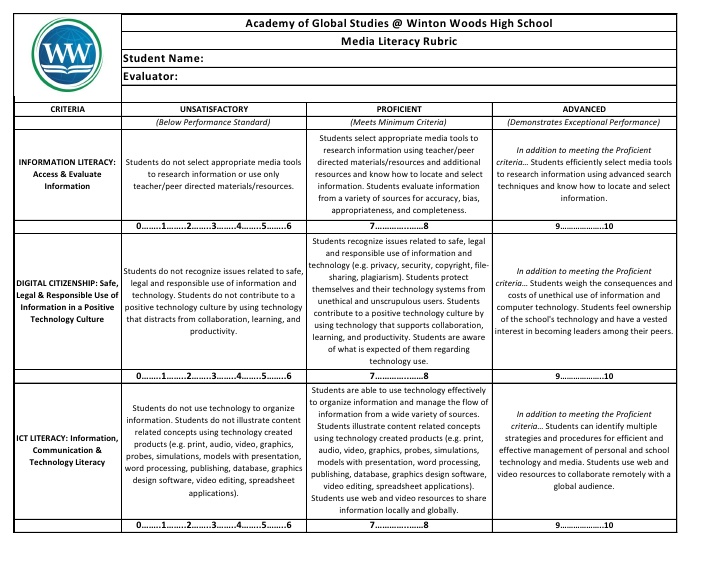
- Create 1 evaluation rubric (justify your choice) concerning credibility or reliability of sources of data, information or digital content (take into consideration LBB3).
I found this rubric and I think it is really appropriate, especially for students I teach.
 Katharinas Blog
